If you are shopping in Potrero Hill, the biggest question may not be how many bedrooms you need. It may be which type of home actually fits the way you want to live. In this neighborhood, a condo, loft, and single-family home can offer very different ownership costs, maintenance responsibilities, and day-to-day experiences. This guide will help you compare the tradeoffs, understand how micro-location affects value, and make a more confident choice. Let’s dive in.
Why property type matters here
Potrero Hill is not a one-format neighborhood. San Francisco Planning describes it as an established residential area with a more mixed-use edge in lower sections, especially near corridors like 16th and 17th Streets and around 8th and Brannan. That mix helps explain why you can see traditional houses on the hill, newer condos in larger buildings, and loft-style homes in adapted industrial properties.
The housing stock also makes this clear. San Francisco Planning’s 2025 housing inventory shows 9,422 units in Potrero Hill, with about 53.0% in 20+ unit buildings, 24.9% in 2-4 unit buildings, and 13.7% single-family units. Recent net growth was also concentrated in larger buildings, which means buyers are often comparing very different ownership options within the same neighborhood.
Start with Potrero Hill’s layout
Before you compare floor plans, it helps to understand the neighborhood’s shape. Official planning documents distinguish a more residential northern slope from a more mixed-use southern slope. That difference can influence everything from the feel of the street to the kind of housing you are most likely to find.
The northern slope is noted for unobstructed views of the Financial District and the Bay, along with a more uniform pattern of Victorian-era and early 20th-century single-family and multi-family homes. The southern slope has a broader mix of uses and a less uniform development pattern. In simple terms, two homes with the same bedroom count can feel very different depending on where they sit on the hill.
Condos in Potrero Hill
What condo ownership means
In California, a condominium gives you title to your individual unit plus a shared interest in common areas. That also means you become part of a homeowners association, and your rights and responsibilities are shaped by the HOA’s governing documents and CC&Rs. In Potrero Hill, condos are often found in larger multi-unit buildings or in converted buildings.
For many buyers, condos offer a lower entry point into the neighborhood. A recent market snapshot showed a median sale price across all home types of $1,499,443, while the median listing price for condos was about $899K. That spread is one reason condos are often the first property type buyers consider here.
Why buyers choose condos
Condos can make sense if you want:
- Lower maintenance responsibility than a house
- Shared building amenities or services
- A more predictable ownership structure
- A lower price point than many single-family options
- Access to newer infill projects or converted properties
In Potrero Hill, condos also align with the neighborhood’s housing pattern. Since larger 20+ unit buildings make up the biggest share of housing stock, condo inventory often reflects the neighborhood’s newer development and denser lower-hill areas.
What to review carefully
When you buy a condo, you are buying more than the unit. You are buying into a building system. That means the HOA budget, reserves, insurance summary, repair history, parking arrangement, storage, and the line between exclusive-use and common area all matter.
California Civil Code section 4525 requires sellers to provide key HOA documents before transfer or contract execution. State law also requires reserve studies at least once every three years for qualifying associations, and reserve planning must address possible changes in regular or special assessments. For you as a buyer, that means the document review period is not a formality. It is where you learn how the building is really run.
Lofts in Potrero Hill
Why lofts are part of the neighborhood story
Lofts are especially relevant in Potrero Hill because of the area’s industrial history. San Francisco Planning describes Showplace Square as a former industrial district where buildings were reused over time, and planning monitoring reports note that industrial properties were developed into live-work lofts that served primarily as residential use. In other words, lofts here are part of the neighborhood’s evolution, not a random housing trend.
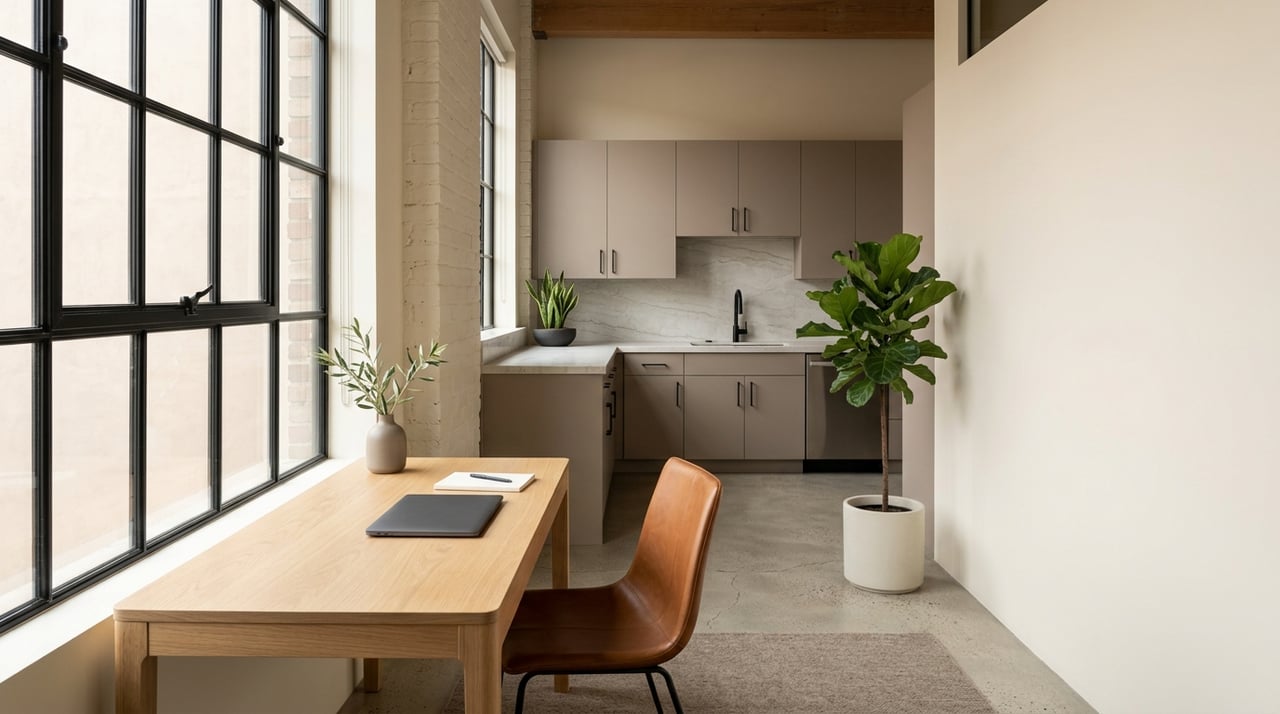
That history often shows up in the architecture. Loft buyers may find open-plan interiors, higher ceilings, larger windows, and more flexible room use than in a conventional condo. If you value space that feels airy and adaptable, a loft can be a strong fit.
Why buyers choose lofts
Lofts can appeal if you want:
- Open, flexible layouts
- Industrial or adaptive-reuse character
- Higher ceilings and larger windows
- A home that feels distinct from a standard condo
- A location near mixed-use or lower-hill areas
For some buyers, that flexibility is the main draw. A loft may work well if you want room for a home office setup, creative use of space, or a less traditional floor plan.
The main tradeoff with lofts
The biggest caution is building variation. In older conversions, quality can differ a lot from one project to another. The California Department of Real Estate warns that converted properties can come with hidden maintenance issues involving roofs, siding, infrastructure, and major building systems such as mechanical, electrical, and plumbing.
That does not mean lofts are a bad choice. It means due diligence matters even more. In Potrero Hill, where adaptive reuse has been part of the neighborhood for years, buyers should look closely at the building’s repair history, reserves, and overall conversion quality.
Single-family homes in Potrero Hill
What makes houses different
Single-family homes offer a different ownership experience from condos and lofts. In a standard subdivision home, you typically have exclusive ownership of the lot or parcel rather than just the interior of a unit. That usually means more control over the property and fewer shared governance issues.
In Potrero Hill, buyers often associate houses with the upper residential parts of the neighborhood. Those homes may come with features that are hard to replicate in a larger building, such as more privacy, more direct access to outdoor space, and stronger view potential depending on location.
Why buyers choose houses
Single-family homes may be the best fit if you want:
- More direct control over the property
- Less shared governance than an HOA setting
- Better potential for private outdoor space
- Stronger separation from neighbors
- A classic hill-neighborhood residential feel
Official planning documents note that the northern slope includes unobstructed views and a more uniform residential pattern. That helps explain why buyers often place a premium on upper-hill homes with light, views, and parking.
The main tradeoff with houses
With more control comes more responsibility. A single-family owner is usually directly responsible for maintenance, repairs, and exterior upkeep. In San Francisco, that can mean roof work, drainage, stairs, retaining conditions, and ongoing care costs that would be shared in a condo building.
Price can also be a hurdle. While every property is unique, current market snapshots suggest that view-oriented and parking-equipped homes can command notable premiums. In Potrero Hill, those features can materially affect both competition and budget.
Compare the three options
| Property Type | Best For | Main Benefit | Main Tradeoff |
|---|---|---|---|
| Condo | Buyers seeking lower entry price and shared upkeep | Simpler maintenance and access to larger buildings | HOA dues, rules, and building-level financial risk |
| Loft | Buyers who value character and flexible space | Open layout and adaptive-reuse appeal | Wider variation in building and conversion quality |
| Single-family | Buyers seeking privacy, control, and outdoor-feeling space | Direct ownership and fewer shared rules | Higher maintenance responsibility and often higher cost |
Micro-location can matter as much as home type
In Potrero Hill, location within the neighborhood can shape your experience almost as much as the property itself. The upper residential hill tends to offer a more traditional residential setting, while the lower hill and mixed-use edges feel more urban. Steep grades in some parts of the neighborhood can also affect daily convenience.
Transit access is one practical advantage across the area. SFMTA lists several routes serving Potrero Hill, including T Third Street, 9 San Bruno, 10 Townsend, 19 Polk, 22 Fillmore, 27 Bryant, 33 Ashbury/18th Street, 48 Quintara/24th Street, 55 Dogpatch, 78X, 79X, and 91 Owl. Open space is also part of the lifestyle picture, with parks and recreation resources such as Potrero Hill Rec Center, Potrero Hill Mini Park, Potrero del Sol, Jackson Playground, McKinley Square, and Utah/18th Mini Park.
A practical way to decide
If you are unsure which option fits best, start with your decision priorities instead of the listing photos. Ask yourself whether you care most about monthly carrying costs, privacy, layout flexibility, outdoor space, views, parking, or lower maintenance. In Potrero Hill, those tradeoffs are often more important than square footage alone.
A simple framework can help:
- Choose a condo if you want a lower entry point and are comfortable reviewing HOA health carefully.
- Choose a loft if you value volume, character, and flexible use, and you are ready to dig into building condition.
- Choose a single-family home if you want more control, more separation, and are prepared for direct upkeep.
The right answer is rarely just about what looks best online. In this neighborhood, it is about matching the building type and the micro-location to how you actually want to live.
If you want help sorting through those tradeoffs block by block, working with a local guide can make the process much clearer. Tracy Hsieh helps San Francisco buyers think strategically about neighborhood nuance, property condition, and the details that shape long-term value.
FAQs
What is the main difference between buying a condo, loft, or single-family home in Potrero Hill?
- The main difference is how ownership, maintenance, and lifestyle come together. Condos usually mean shared governance through an HOA, lofts often bring more open space and conversion-related due diligence, and single-family homes usually offer more direct control with more maintenance responsibility.
Are condos more common than single-family homes in Potrero Hill?
- Yes. San Francisco Planning’s 2025 housing inventory shows that larger 20+ unit buildings make up about 53.0% of Potrero Hill housing stock, while single-family units make up about 13.7%.
What should condo buyers review in a Potrero Hill HOA?
- Buyers should review the HOA budget, reserve disclosures, governing documents, insurance summary, assessment history, repair history, parking and storage details, and what counts as exclusive-use versus common area.
Why are lofts so common in parts of Potrero Hill?
- Lofts are tied to the area’s industrial and adaptive-reuse history. Planning documents note that former industrial properties in and around Showplace Square were developed into live-work lofts that served primarily as residential use.
Which part of Potrero Hill feels more residential for buyers?
- Official planning documents describe the northern slope as having a more uniform residential fabric and unobstructed views, while the southern slope has a greater mix of uses and a less uniform development pattern.
Do views and parking affect home value in Potrero Hill?
- Current market snapshots suggest they do. While not an official pricing rule, available listing data indicates that view homes and homes with parking can command notable premiums compared with lower-priced condo inventory.